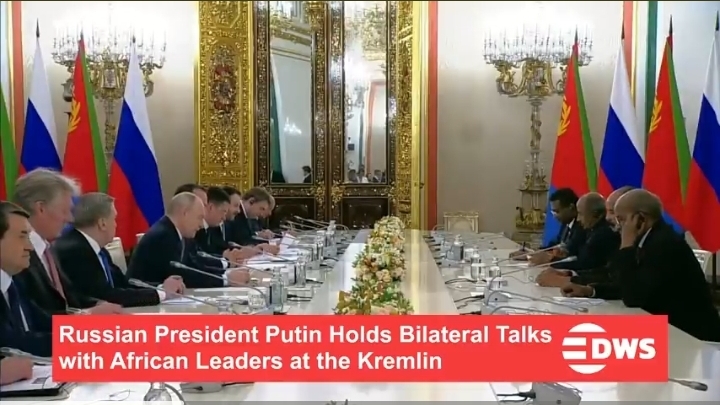
On a warm evening in Bujumbura, Burundi’s largest city, a group of young entrepreneurs gathered at a lakeside café overlooking Lake Tanganyika. Their conversation centred on a news report from Moscow, where world leaders were discussing Africa’s place in an increasingly competitive global order.
Among them was 26-year-old Mireille, a technology graduate who had spent three years trying to secure funding for her agricultural logistics startup. Like many young entrepreneurs across Africa, she had the ideas and determination to build a successful business but struggled to find the financial support needed to turn her ambitions into reality.
The news from Moscow caught her attention. Burundian President Évariste Ndayishimiye had argued that Africa possessed the resources, talent and potential to become an equal force in a multipolar world. He also stressed that the continent should no longer be treated as a battleground for competing global powers.

For Mireille, the message touched on something she and many of her peers had experienced for years. Africa, she believed, had too often been portrayed as a continent waiting for assistance rather than one capable of shaping its own future.
“Growing up, I mostly heard people talking about what Africa needed from the rest of the world,” she said. “The conversation was always about aid, foreign intervention or which side African countries should take in a global dispute. We rarely talked about what we could contribute. We have talented young people, natural resources and innovative ideas. Those things should count for something.”
Her reflections capture a growing sentiment among young Africans who want their countries to have a stronger voice in international affairs. For many, the debate over a multipolar world is not simply about diplomatic influence or competition between major powers. It is also about jobs, investment, access to technology and the opportunity to build better lives at home.
Across Africa, countries have become increasingly important to international players seeking access to minerals, energy resources, agricultural land and emerging consumer markets. China, Russia, the United States, the European Union and other partners have expanded their engagement with the continent, each pursuing its own economic and strategic interests.
These relationships have created opportunities, particularly in infrastructure, trade and technology. But they have also raised difficult questions about who ultimately benefits from Africa’s growing international importance.
For communities on the ground, the consequences of global competition can be felt in ways that have little to do with diplomatic statements. Changes in international trade, disruptions to shipping routes and fluctuations in commodity prices can quickly affect the cost of everyday goods and the survival of small businesses.
In Bujumbura’s busy central market, Jean-Paul, a trader who has spent more than two decades selling textiles and household goods, has experienced these pressures firsthand. His business depends on goods arriving at affordable prices and customers having enough money to buy them. When international tensions disrupt trade, he often has little choice but to absorb the additional costs or pass them on to customers who are already struggling.
“We don't want Africa to become a battlefield for other people's interests,” he said as he arranged brightly coloured fabrics at his stall. “When powerful countries compete, ordinary traders are the ones who feel the consequences. Prices change, supplies become difficult to find and business suffers. We want fair trade and respect. We should be free to work with different countries according to our own interests.”
Jean-Paul’s concerns reflect a broader challenge facing African economies. Stronger international partnerships can bring investment and new opportunities, but their benefits are not automatic. Much depends on the terms of those agreements, the strength of local institutions and whether domestic businesses can compete and grow.
For Africa to exercise greater influence in a multipolar world, political declarations alone will not be enough. Governments must negotiate agreements that serve their national interests, invest in education and infrastructure, support local industries and create conditions in which African businesses can compete internationally.
The continent’s young population could play a decisive role in that transformation. Africa has one of the youngest populations in the world, with roughly 60 percent of its people under the age of 25. This demographic reality presents both an enormous opportunity and a serious challenge. Without sufficient jobs, education and investment, a growing workforce can face mounting economic pressures. With the right policies and partnerships, however, it could become one of the continent’s greatest assets.
For young entrepreneurs such as Mireille, the promise of a multipolar world lies in the possibility of building partnerships based on mutual benefit rather than political loyalty.
Her startup is developing software intended to improve the movement of agricultural products from farms to markets. The idea is straightforward: help farmers find reliable transport, reduce delays and connect their products with buyers more efficiently. If successful, the system could eventually serve businesses beyond Burundi’s borders.
Yet turning the idea into a functioning business requires investment, reliable digital infrastructure and access to larger markets. Mireille has spent considerable time exploring funding opportunities, but some programmes have been difficult to navigate, while others come with conditions that do not always align with the needs of her business.
She hopes that stronger international economic cooperation will create more opportunities for African startups to attract investment on the basis of their commercial potential.
“When investors see Africa as a partner rather than simply a place to pursue their own interests, the relationship changes,” she explained. “We are not just trying to solve a problem in Burundi. Our technology could help businesses move agricultural products across borders and make trade more efficient throughout the region. We have ideas and people who are ready to work. We need opportunities to prove what we can do.”
Her ambition highlights an important distinction in the debate over Africa’s place in global affairs. The continent does not necessarily need to choose one international partner over another. Instead, African countries could benefit from engaging with a wider range of partners while negotiating better terms and protecting their own economic priorities.
However, diversification alone will not guarantee independence. Countries that rely heavily on exporting raw materials, importing manufactured goods and borrowing from external lenders can remain vulnerable even when they maintain relationships with several global powers. Genuine economic autonomy requires stronger domestic production, regional trade, technological development and institutions capable of ensuring that public resources serve the wider population.
Regional cooperation is particularly important. Individually, many African economies have limited bargaining power in negotiations with major global markets. Working together through regional institutions and continental trade arrangements could help countries expand their markets, strengthen supply chains and improve their ability to negotiate favourable agreements.
For Burundi, as for many other African countries, the challenge is to translate diplomatic ambition into tangible improvements in people's lives. A more influential international position means little to a young graduate who cannot find work, a farmer who struggles to reach buyers or a trader whose profits disappear as costs rise.
The test of a multipolar world, therefore, will not be how frequently African leaders appear alongside their counterparts from major powers. It will be whether those relationships help create jobs, expand local industries, improve living standards and give African countries greater control over their economic choices.
As evening turned to night over Lake Tanganyika, Mireille and her colleagues returned their attention to the practical demands of running a business. They discussed potential investors, software improvements and plans for the coming week. The international debate that had sparked their conversation remained important, but their immediate concerns were closer to home.
They knew that Africa's economic transformation would not happen overnight. Political disagreements, limited infrastructure, financing gaps and institutional weaknesses remain significant obstacles. Greater international recognition will need to be matched by sustained domestic reforms and a willingness among African governments to put long-term development ahead of short-term political gains.
Still, the aspirations of young Africans such as Mireille point to a changing outlook. They are not asking the world to abandon its interest in the continent. They want that interest to translate into relationships that recognise African countries as capable partners with their own ambitions, expertise and priorities.
The message emerging from Bujumbura is clear: Africa wants to participate in shaping the global order, not simply adapt to decisions made elsewhere. Its future will depend not only on how major powers compete for influence but also on how effectively African countries use their resources, strengthen their institutions and invest in their people.
For the young entrepreneurs gathered beside the lake, a multipolar world is meaningful only if it creates room for African ideas to succeed. The continent's challenge is to turn that aspiration into economic reality—and ensure that its people are not merely spectators in a changing world, but active participants in determining what comes next.