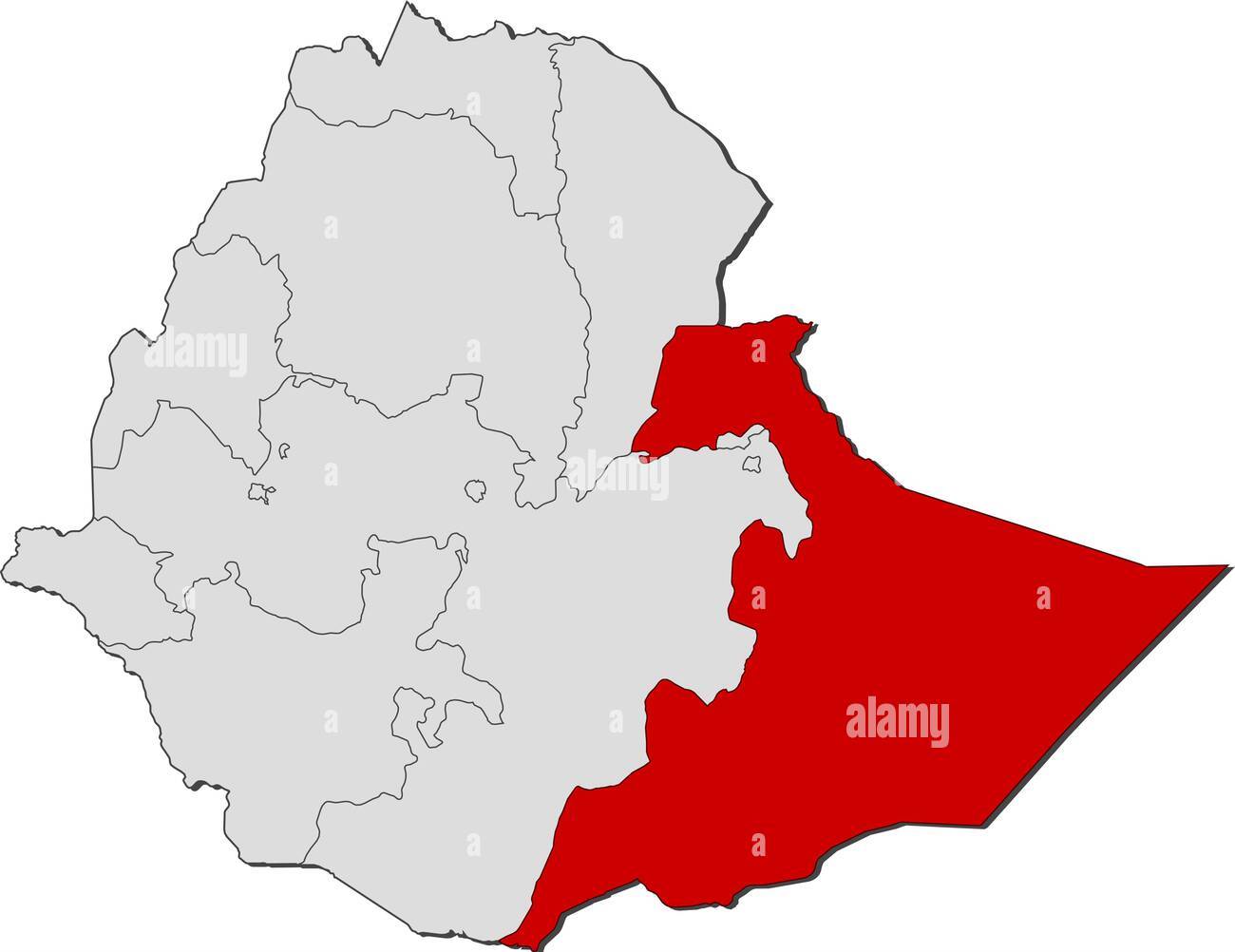
The question of whether Somalis are marginalised under Ethiopia's current government is more complicated than a simple argument about political inclusion or exclusion. It touches on the history of the Ethiopian state, the promises of ethnic federalism, the distribution of national resources, political representation, security, and the relationship between the federal government in Addis Ababa and the Somali Regional State.
For decades, the Somali people have occupied a distinctive position within Ethiopia's political landscape. They are among the country's largest ethnic communities, have a strong regional identity and maintain historical, cultural and economic connections across the Horn of Africa. Yet, despite their numerical significance and strategic geographical position, questions about their influence over national decision-making and their share of the country's economic opportunities continue to attract debate.
To understand the issue, it is necessary to distinguish between three different forms of marginalisation: political marginalisation, economic marginalisation and social or institutional marginalisation. A community may have its own regional government and formal constitutional rights while still experiencing limitations in its influence over national institutions and access to public resources.

The political question: Representation does not necessarily mean influence
The 1995 Ethiopian Constitution established an ethnic-based federal arrangement intended to give nations, nationalities and peoples greater control over their political affairs. The Somali Regional State, like other regional states, was granted constitutional authority over regional administration, legislation and local development priorities.
On paper, this arrangement provides Somalis with an institutional foundation for political self-government. The Constitution also provides for representation of nations, nationalities and peoples in the House of the Federation, with at least one representative for each group and additional representation based on population.
However, the existence of constitutional representation does not automatically translate into meaningful influence over federal decisions.
This distinction is particularly important when examining the position of Somalis in the current political order under Prime Minister Abiy Ahmed. The central question is not simply whether Somali officials occupy government positions, but whether Somali political interests meaningfully shape decisions concerning national security, economic policy, infrastructure investment, resource management and the distribution of public funds.
Available parliamentary figures for the 2026–2031 parliament list 22 representatives from the Somali Region. This establishes a formal parliamentary presence, but the number alone cannot demonstrate how effectively those representatives influence legislation, budget allocations or executive decisions.
The broader problem is that Ethiopia's federal system continues to face a tension between regional autonomy and the concentration of political authority at the centre. Critics of the system argue that regional administrations have frequently struggled to exercise meaningful independence from federal political structures. An analysis published by Ethiopia Insight in July 2026, drawing on discussions in Jigjiga, reported concerns that regional governments are treated more as extensions of the federal centre than as autonomous political institutions.
For Somali communities, this raises an important question: Can political self-government be considered meaningful when the most consequential decisions remain heavily influenced by the federal government?
The economic dimension: A region rich in potential but facing persistent challenges
Economic marginalisation is another important dimension of the debate.
The Somali Region occupies a strategically significant position in the Horn of Africa. It connects Ethiopia to neighbouring Somalia and Djibouti and contains important trade corridors linking the country to international markets. Its pastoral economy, livestock resources, agricultural potential and energy prospects give it considerable importance to Ethiopia's long-term economic development.
Yet strategic importance has not necessarily translated into equivalent improvements in living conditions.
The region continues to face serious challenges involving drought, water shortages, limited infrastructure, inadequate access to essential services and the vulnerability of pastoral communities. These problems are not exclusively the result of decisions made by the current administration. They have historical roots in decades of uneven development, geographical constraints, weak institutions and recurring environmental crises.
Nevertheless, the government in power cannot be separated from its responsibility to address them.
The International Monetary Fund's July 2025 assessment of Ethiopia's fiscal federalism identified significant regional disparities in fiscal capacity and development needs. It also warned that federal transfers have been constrained by limited fiscal space and that existing arrangements have not fully addressed differences in regional poverty.
This is particularly relevant to the Somali Region, where climate-related emergencies and the costs of providing services across a vast geographical area create substantial demands on public finances.
The issue, therefore, should not be reduced to how much money the federal government allocates to the region. It should also involve whether allocations reflect population needs, poverty levels, geographical challenges, infrastructure deficits and the cost of delivering public services.
A fair federal arrangement must recognise that allocating equal amounts to regions with unequal starting conditions does not necessarily produce equitable development.
Security, historical grievances and the question of trust
Political marginalisation cannot be examined without considering the history of relations between the Ethiopian state and Somali communities.
For many years, the Somali Region experienced insurgency, political repression and serious human rights violations. Human Rights Watch documented torture and other abuses at Jail Ogaden, including during the previous administration. Its 2018 investigation also described the region's historical institutional weaknesses, restrictions on independent media and the limited political space available to opposition groups.
The political transition of 2018 created an opportunity to address these historical grievances. The subsequent peace agreement with the Ogaden National Liberation Front (ONLF) was an important development in the relationship between the federal government and Somali political actors.
However, ending an armed conflict and establishing lasting political reconciliation are not the same thing.
The Somali Regional State established a Truth and Reconciliation Commission in July 2021 to investigate abuses committed during the decade preceding the 2018 political transition. According to the European Union Delegation to Ethiopia, the commission had collected approximately 42,000 statements by October 2024. The same October 2026 assessment noted that the process continues to face funding constraints, particularly following reductions in federal fiscal transfers.
This is an important indicator of the unfinished work of reconciliation.
For communities that experienced historical abuses, meaningful inclusion requires more than the appointment of regional officials or the signing of peace agreements. It requires credible investigations, accountability, institutional reform, compensation where appropriate and confidence that past abuses will not be repeated.
At the same time, the security challenges facing the region should not be overlooked. Border instability, armed violence and local conflicts have continued to affect communities. Human Rights Watch's 2026 assessment of Ethiopia reported clashes involving local communities and regional militias in the Dacawaley area between late 2024 and early 2025, resulting in deaths, injuries and renewed tensions.
The challenge for federal and regional authorities is to provide security without undermining constitutional rights or treating legitimate political grievances as security threats.
The federal government's record: Inclusion and its limitations
It would, however, be incomplete to portray the relationship between the Somali Region and the federal government exclusively through the lens of exclusion.
The political transition under Abiy Ahmed brought significant changes to Ethiopia's relationship with Somali political movements. The peace process with the ONLF opened a new avenue for political participation, while the Somali Regional State continued to operate its own regional institutions.
The region also has representation in federal institutions, and Somali political figures have occupied senior government positions. These developments demonstrate that the question is not one of absolute political exclusion.
But political inclusion should not be measured solely by the visibility of individuals in government.
A few senior appointments cannot, by themselves, establish whether an entire community enjoys equal access to political influence. The more meaningful test is whether institutions are responsive to the interests of the population they represent.
Are Somali professionals adequately represented in federal ministries, the diplomatic service, the military leadership, the judiciary and national economic institutions? Do Somali representatives participate meaningfully in decisions affecting their region? Are regional development priorities reflected in national investment programmes?
These are questions that require systematic evidence rather than assumptions based on individual appointments.
There is also a broader issue concerning the political space available to regional opposition parties and independent civic organisations. Genuine federalism requires more than cooperation between regional administrations and the ruling party. It requires institutions through which citizens can question their governments, organise politically and demand accountability without fear of intimidation.
The strategic importance of the Somali question
The debate has implications beyond the Somali Regional State itself.
Ethiopia's geographical position makes the region central to the country's economic and geopolitical ambitions. As a landlocked country seeking reliable access to international markets, Ethiopia depends heavily on transport corridors connecting it to neighbouring countries.
The Somali Region's proximity to Djibouti and Somalia makes it an important component of these ambitions.
However, geography should not be the only reason the federal government pays attention to the region. Its people should enjoy the same constitutional protection, development opportunities and political dignity as citizens elsewhere in Ethiopia.
There is a danger in treating peripheral regions primarily through the lenses of national security, border management and strategic infrastructure. Such an approach risks overlooking the everyday concerns of ordinary citizens: schools, hospitals, roads, drinking water, employment and political accountability.
The Somali question is therefore also a test of the credibility of Ethiopian federalism.
If the federal arrangement promises equality among nations and nationalities, that promise must be reflected in the distribution of resources and the functioning of national institutions, not simply in constitutional language.
What should meaningful inclusion look like?
Addressing concerns about marginalisation requires a practical approach rather than political rhetoric.
First, federal resource allocation should become more transparent. Regional governments and citizens should have access to clear information about federal transfers, development expenditure and the criteria used to distribute national resources.
Second, the federal government should strengthen the institutional capacity of the Somali Regional State. Regional autonomy is meaningful only when regional institutions have sufficient administrative, financial and political authority to implement development priorities and respond to local needs.
Third, federal institutions should promote fair representation based on transparent recruitment, professional qualifications and equal opportunities. Representation should extend beyond political appointments to the institutions responsible for national decision-making.
Fourth, the government should support the Somali Region's economic transformation. Investment in roads, water infrastructure, education, healthcare, livestock markets, telecommunications and renewable energy would address longstanding development challenges while strengthening the region's contribution to the national economy.
Finally, historical grievances must be addressed through credible transitional justice and reconciliation mechanisms. The work of the regional Truth and Reconciliation Commission should receive adequate institutional and financial support.
These measures would not only benefit Somali communities. They would strengthen the federal system as a whole.
The difference between being represented and being empowered
Ultimately, asking whether Somalis are marginalised under the current Ethiopian government requires looking beyond the presence of Somali politicians in government offices.
There are clear institutional avenues for Somali political participation, constitutional recognition of regional self-government and developments in the peace process that should be acknowledged. At the same time, persistent economic disparities, historical grievances, security concerns and questions about the influence of regional governments over federal decisions remain important areas of public debate.
The available evidence does not establish that Somalis are completely excluded from Ethiopia's political system. Nor does formal representation establish that their political and economic interests are being adequately served.
The distinction matters.
A community can have a regional president, parliamentary representatives and senior government officials while still facing questions about the quality of its political influence and the fairness of its economic opportunities.
For Ethiopia, the challenge is to make federalism work not merely as an administrative arrangement but as a genuine system of shared political authority, equal citizenship and equitable development.
The Somali people should not have to choose between their regional identity and their place in the Ethiopian state. Their constitutional rights, cultural identity and economic aspirations should be respected simultaneously.
Perhaps the most important question is not simply whether Somalis are represented in the current government, but whether they have a meaningful voice in shaping the country's future.
That is the standard against which the promises of Ethiopian federalism should be examined.
Editorial note: This is an analytical opinion piece, not a finding that establishes discrimination as a matter of law. A definitive assessment would require comparative data on federal appointments, budget allocations, public investment, service delivery and political participation across regions.