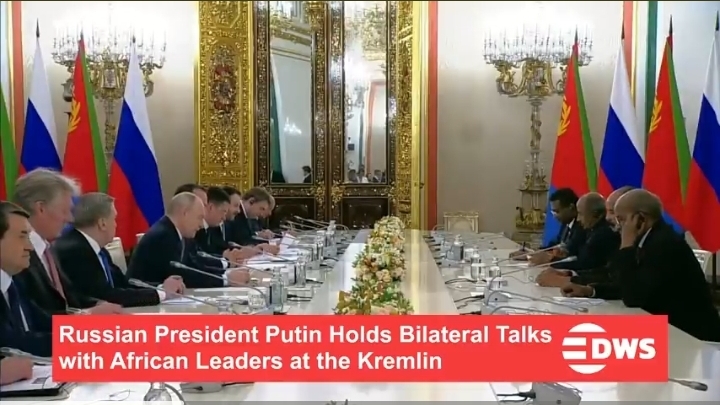
MOSCOW - The relationship between Russia and Eritrea has quietly become one of the most interesting political partnerships developing between Moscow and Africa. While it does not always attract the same international attention as Russia’s ties with larger African countries, the growing closeness between President Vladimir Putin and Eritrean President Isaias Afwerki suggests that the relationship carries significance beyond ordinary diplomatic exchanges.
At the heart of the relationship is a shared political outlook. Both Moscow and Asmara have often expressed strong criticism of Western influence in international affairs and have called for a more balanced, multipolar world. For Eritrea, which has spent years under international pressure and isolation, Russia represents an important global partner outside the traditional Western political system. For Russia, Eritrea is a reliable voice in the strategically important Horn of Africa.
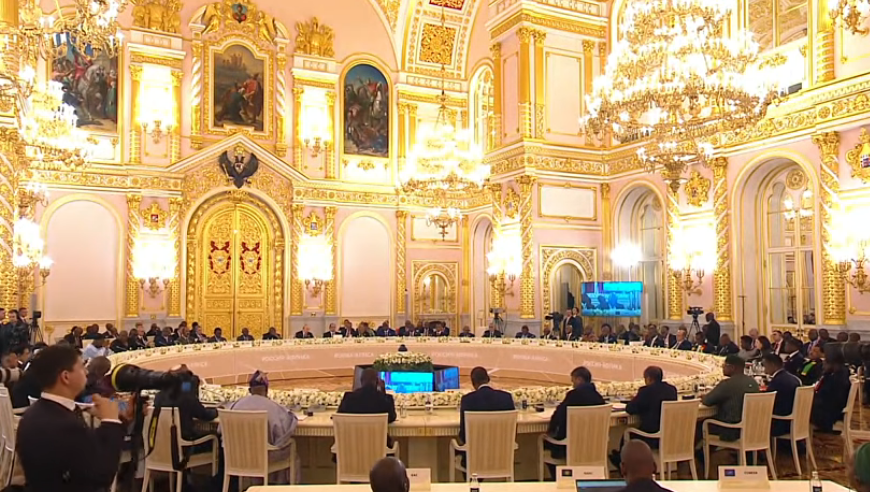
The personal relationship between Putin and Afwerki has also become increasingly visible. Their meetings have often been marked by unusually warm language and discussions that go beyond formal diplomacy. At the Russia–Africa Summit, Afwerki openly praised Russia's role and described Putin as actively engaged in efforts to strengthen cooperation with African countries.

During one of their meetings, Afwerki spoke about what he described as Africa's difficult economic situation. He argued that many African governments and economies have limited capacity to finance major development programmes and suggested that Russia should use its resources, technology and industrial strength to play a greater role in supporting the continent.
“Russia should take the lead and make its contributions,” Afwerki said, while stressing that stronger Russian involvement should not be viewed as interference in African affairs.
His remarks revealed something important about the relationship between the two countries. Eritrea is not simply looking at Russia as another diplomatic partner. Asmara appears to see Moscow as a potentially important strategic force capable of influencing Africa's future economic and political direction.
The Horn of Africa gives Eritrea an additional strategic importance. Eritrea sits along the Red Sea, one of the world's most important maritime corridors. The country's coastline and ports, particularly Massawa and Assab, have long attracted international interest because of their location near major global shipping routes.
This geographical position makes Eritrea valuable to any major power seeking to expand its influence in the Red Sea and the Horn of Africa. Russia's growing interest in the region has therefore raised questions about whether its relationship with Eritrea could eventually develop into a broader strategic partnership involving maritime cooperation, security and regional influence.
Russian and Eritrean officials have publicly discussed cooperation in several sectors, including trade, energy, mining, agriculture, marine resources and security. A Russian naval visit to Eritrea also demonstrated Moscow's interest in maintaining closer contact with the country.
However, much of what happens behind high-level meetings remains unclear. There is public evidence of discussions about expanding cooperation, but many of the details surrounding potential security and strategic agreements are not fully available. This has created speculation about the deeper nature of the Russia–Eritrea relationship.
What is clear is that both countries see benefits in working more closely together. Eritrea offers Russia a politically reliable partner in a strategically sensitive part of Africa. It also provides Moscow with stronger diplomatic connections in the Horn of Africa and potentially greater influence around the Red Sea.
Russia, meanwhile, offers Eritrea an alternative international partner at a time when Asmara continues to seek greater independence in its foreign relations. Moscow's political support, technological capacity and potential investment could become increasingly important to Eritrea's development ambitions.
Economic cooperation is another area where both countries see potential, although the relationship has so far produced more political discussion than major visible investments. Russia has expressed interest in expanding trade and exploring opportunities in mining, energy and infrastructure. Moscow has also provided Eritrea with humanitarian grain assistance.
The bigger question is whether the strong political relationship between Putin and Afwerki will eventually lead to major economic and strategic projects. Eritrea's location, combined with Russia's growing interest in Africa and the Red Sea, creates the possibility of a deeper partnership in the years ahead.
For now, the relationship remains relatively quiet compared with Russia's dealings with other African powers. But this may be exactly what makes it important. Away from the international spotlight, Moscow and Asmara appear to be building a relationship based on political trust, shared views on global affairs and long-term strategic interests.
The Russia–Eritrea partnership may not be defined by one secret agreement or dramatic announcement. Instead, its significance lies in a gradual strategic convergence between two governments that increasingly see each other as useful and dependable partners.
As competition for influence in Africa and the Red Sea continues to grow, the relationship between Russia and Eritrea will likely deserve closer attention. The real test will be whether the political friendship between Putin and Afwerki can be transformed into concrete economic, security and development cooperation.
If that happens, the quiet relationship between Moscow and Asmara could become far more important than it currently appears.