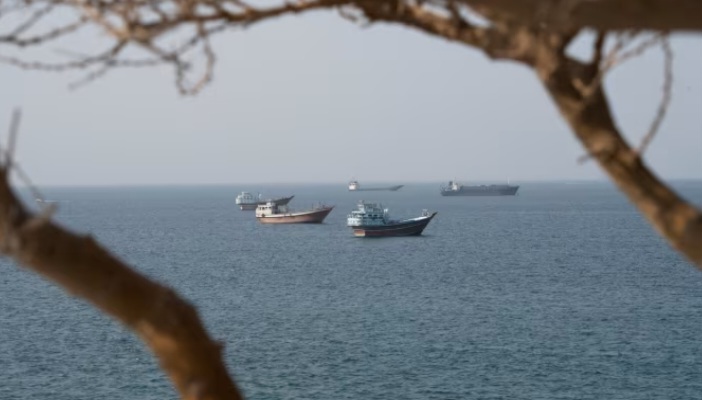

Being landlocked does not inherently condemn a nation to poverty, nor does possessing a coastline guarantee prosperity. Eritrea, for instance, boasts more than three islands and two major ports, yet where does Eritrea stand today? Nevertheless, the maritime question raised by the government is fundamental; it is beyond doubt that we require such access. Assab is inhabited by the Afar people; indeed, it was founded by them. In the Afar language, “Assab-uy” translates to “Red Pond.” Crucially, Ethiopia’s maritime history predates even the pre-Aksumite civilisations.
Keyir: We are joined in the studio by Dr Tigistu Awelu, a geopolitical researcher and political candidate. Thank you most sincerely for sacrificing your time to be with us. Let us begin with the historical context. Ethiopia’s relationship with the Red Sea spans millennia. Could you briefly explain how this history informs today’s maritime aspirations? Furthermore, what role do historical border regions play in the contemporary challenges surrounding port access?
Tigistu: That is an excellent question. It is always wise to examine matters from their roots. Ethiopia’s maritime engagement began before the Aksumite era, notably during the prominent D’mt civilisation. The capital of D’mt was Yeha, situated in the northern reaches of our country. Historically, state formation is driven by several factors: trade, religious ties, and military strategic interests. Looking back, Ethiopia’s Red Sea connection originates there.
However, it was during the Aksumite Empire, particularly from the 3rd century AD onwards, that this relationship flourished. Aksum was renowned for its extensive trade networks, specifically its interactions with the Greek and Roman worlds. This involved a robust exchange of exports and imports. During this zenith, Aksum maintained absolute control over the port of Adulis on the Red Sea coast. From there, trade routes extended to what we now call Somaliland. Our connection was not merely commercial; Aksum was a dominant power that exercised significant control over the Red Sea.
It was only after the 7th century, as Aksumite power began to wane, that this control slipped away. At its peak, Aksum was regarded as one of the world’s four great powers, alongside Persia, Rome, and China. Adulis was not merely a commercial hub but a sophisticated maritime centre for ship repairs and the construction of naval military vessels. This is our true historical backdrop.
Following the Aksumite era, external powers such as the Ottoman Turks began to dominate the region, which gradually eroded Ethiopia’s maritime access. This was further complicated by Italian colonial ambitions, which originated from Assab. Later, following the Federation, Assab and Massawa were restored to Ethiopia when Eritrea was reunited with the motherland. We remained within this framework for a significant period. In 702 AD, the rise of Islamic power in the Arabian Peninsula led to the destruction of Adulis. Thereafter, internal political shifts diverted our focus away from the coast.
Historically, Ethiopia also controlled Zeila in the Gulf of Aden, which was part of our sovereign territory. The distance from the coast to the interior was roughly 300 kilometres. Our heritage is inextricably linked to the sea; Aksum’s prosperity was built on maritime commerce. Aksum was the first African state to mint its own currency—in gold, silver, and bronze—to facilitate international trade. These commercial ties reached as far as the Indian Ocean, with Adulis serving as the gateway.
Keyir: Dr Tigistu, thank you for that comprehensive overview. Turning to the present: why has the demand for maritime access intensified so significantly now? Which geopolitical trends are exacerbating this renewed pressure?
Tigistu: We must recognise that Ethiopia is situated in the Horn of Africa—a region that has seen numerous external interventions since the departure of the Ottoman Turks. Currently, the Horn comprises four sovereign states: Somalia, Djibouti, Ethiopia, and Eritrea (the latter having gained independence in 1991). However, global powers often refer to a "Greater Horn of Africa" to suit their own geopolitical interests.
This region is vital because it hosts three major maritime trade routes: the Red Sea, the Gulf of Aden, and the Bab-el-Mandeb strait. This corridor facilitates a massive volume of annual shipping tonnage connecting Europe and the Middle East. Geopolitically, Ethiopia is the most populous nation in the Horn and the second-most populous in Africa, with an estimated 130 million citizens. Furthermore, Egypt’s historical interests remain a factor. Ethiopia’s foreign policy challenges are often rooted in internal instabilities. The Red Sea issue has always been present; it is only now becoming more prominent.
During the EPRDF era, opposition groups raised the Red Sea question, but the government remained silent for its own reasons. However, for those of us in political leadership, this question has always persisted. Egypt is a primary actor here; one might even call them the "author of the drama." Eritrea’s secession was intrinsically linked to depriving Ethiopia of its Red Sea access. Ethiopia’s potential has always been significant; if our economy were more robust, we would be a formidable regional power. Historically, our voice carried weight because of our role in the anti-colonial movement and the struggle for African independence. Today, however, our influence is hampered by economic struggles, internal peace issues, and diplomatic hurdles. Colonial interests remain focused on weakening Ethiopia.
This primarily benefits the Arab world, as they are the primary stakeholders in the Red Sea. Egypt, in particular, has long sought to prevent Ethiopia from emerging as a regional leader. They oscillate between feigning friendship and active subversion. Historically, various Ethiopian factions, particularly those in armed struggle, have sought support from neighbouring states like Sudan or Arab nations like Syria. This was, and remains, a tactic to safeguard their own interests.
The reality is that strength begets influence. When you possess economic and military might, your diplomatic voice is heard. Without that foundation, even the most righteous arguments fall on deaf ears. Consequently, diplomacy is an extension of internal strength. There is an inherent conflict of interest in the region. Somalia, for example, often depicts Ethiopia as the "Israel of the Horn," using religious rhetoric to paint us as a "Christian island" for propaganda purposes.
The port question is essential, both historically and diplomatically. While the necessity is clear, the methods of achieving it may differ. For 27 years, this question was suppressed. Ethiopia and Eritrea remained in a state of "no war, no peace" for two decades, yet the government never raised the maritime issue. Now, the political landscape has shifted. However, we must clarify a misconception: being landlocked does not mandate poverty, nor does a coast guarantee wealth. Eritrea has ports and islands, yet where is its development? Somalia has a vast coastline, yet it remains troubled. Conversely, several European nations are landlocked but have secured maritime access through savvy diplomacy and agreements with neighbours.
Ethiopia is surrounded by port-rich neighbours—Somalia, Djibouti, and Eritrea—yet we continue to incur massive costs. Beyond the economic burden, I am most concerned with national security. If our relations with port-hosting neighbours sour, they could theoretically throttle our imports and exports, stifling our growth. If maritime and land routes are obstructed, we are forced to rely on air transport, which is prohibitively expensive. Currently, these routes are being used as leverage against us. The Ethiopian people possess the capacity for greatness; what we currently lack is a cohesive and effective political environment.
The government’s decision to raise this issue is fundamentally sound; the access is necessary. How we pursue it, however, requires careful study. By raising the issue, Ethiopia has captured the international community’s attention. Whether the result is immediate or takes decades, the question is now on the global agenda. This is similar to Egypt’s ancient and persistent claims regarding the Nile.
Geopolitically, Ethiopia is closest to Djibouti. However, over ten foreign nations have established bases or port interests there, paying roughly $300 million annually in lease fees. Meanwhile, Ethiopia spends upwards of $2 billion annually on port services. Given that Djibouti’s annual revenue is roughly $4 billion, Ethiopia effectively accounts for 50% of their income.
Furthermore, Djibouti currently receives its fresh water from Ethiopia. The nation is built on two primary ethnic groups: the Somali and the Afar. While the Afar are the minority there, both groups also reside within Ethiopia. This creates a profound demographic and social link that can be leveraged for better or worse. Furthermore, Assab was founded by the Afar. The very name “Assab” derives from the Afar word “Assab-uy,” meaning “Red Pond.” This linguistic root confirms their role in its founding.
Over time, Assab’s status has fluctuated—sometimes as an Ethiopian province, other times as part of the Eritrean administrative structure. Eventually, it was designated an "Autonomous Region." The previous regime avoided ethnic naming conventions, much like the designation of the "Ogaden Autonomous Region." Having visited these areas, I know that all these ports are geographically close to us. The primary ones are Tadjoura, Assab, and Haleb Island (located between the two). Past governments occasionally clashed over the control of Assab. The Tigrinya speakers on both sides of the border are essentially the same people. Ethiopia is a geopolitical microcosm of the Horn, housing all the constituent peoples of the region within her borders.
Keyir: Dr Tigistu, thank you. Considering Ethiopia’s relations with Djibouti, Eritrea, Somalia, and Egypt, how do you view this maritime quest? Additionally, as China, the US, and Russia expand their presence in the region, how will these global powers influence Ethiopia’s maritime strategy?
Tigistu: Our three neighbours—Somalia, Djibouti, and Eritrea—are members of the Arab League. Furthermore, there is a Red Sea littoral states coalition with its own strategic agenda. Recent naval exercises involving five nations, including Jordan, aimed to support Egyptian interests; while I cannot confirm Eritrea’s direct participation, they certainly support the principle of Red Sea exclusivity.
Saudi Arabia plays a pivotal role here, aligning with Egypt to safeguard their collective interests. Currently, they have fostered a strong relationship with Eritrea. In various ways, the objective is to keep Ethiopia weakened. From a security standpoint, if we are at war, we cannot import essential equipment through their territory; we would be forced to use expensive air freight. They could also subtly obstruct our trade. Furthermore, this has become a theatre of competition between emerging powers like Saudi Arabia and the UAE.
While established powers often pay lip service to the need for peace, major arms producers—including Turkey—grow their economies through the sale of military hardware, both legally and otherwise. As long as there is a market for these goods, conflict will persist. Djibouti is the only relatively stable nation in the region, though it faces internal political friction regarding the Afar. Somalia, Ethiopia, and Sudan are all grappling with internal crises. For external powers, war is simply business.
In Somalia, for instance, Arab nations like Saudi Arabia and the UAE establish military camps and conduct drills to prepare for conflict, while simultaneously building hospitals to treat the casualties of that very conflict. No one is thinking about building schools to educate Somali children; I have seen this firsthand. Whether they are established or emerging powers, their actions in the Horn are dictated solely by their own interests.
The border at Assab is a place I know well; it is a 57-kilometre stretch that one can traverse on foot. Similarly, half the population of Tadjoura is Afar, linking them directly to Ethiopia’s Afar region. Strengthening these ties would be immensely beneficial for Ethiopia. We have the opportunity to utilise Assab through diplomacy and historical precedent. Given its proximity compared to Djibouti, and the shared heritage of the people—who showed immense joy when briefly reunited in the past—the potential is vast. Ethiopia contains the very heart of the Horn; the Tigrinya spoken in Eritrea is spoken here, we have a Somali region, and we have an Afar region. These are the factors we must weigh.
The maritime question may be resolved today, in ten years, or in a century. However, just as Egypt has enshrined its Nile interests in its constitution, Ethiopia must do the same. This ensures that any future leader or party is legally bound to protect our national destiny.
Ethiopia must secure its maritime rights through peaceful, diplomatic means. War serves no one; it is merely a catalyst, not a victory. Negotiations following a war are often dictated by the bitterness of the "winner vs loser" dynamic, which is rarely just or sustainable. Peace is the only viable path. Furthermore, global powers may still harbour resentment against Ethiopia because we were never colonised. While diplomacy often stays on the surface, Ethiopia has the potential to lead Africa if she grows strong. Therefore, I believe this must be settled through agreement and mutual understanding. I do not, under any circumstances, advocate for war.