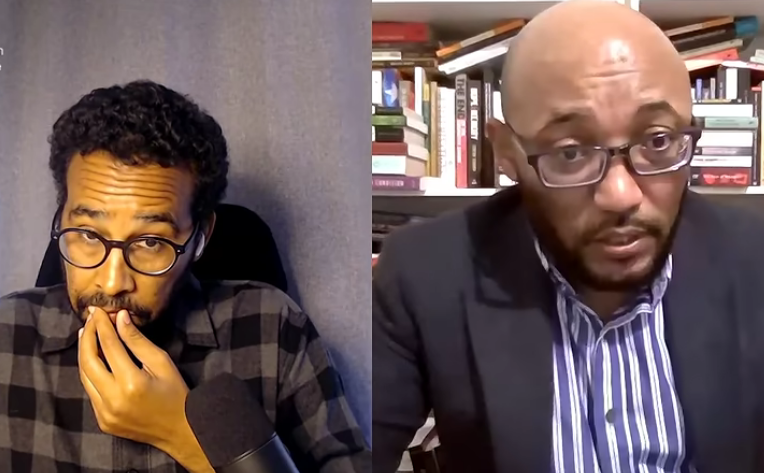
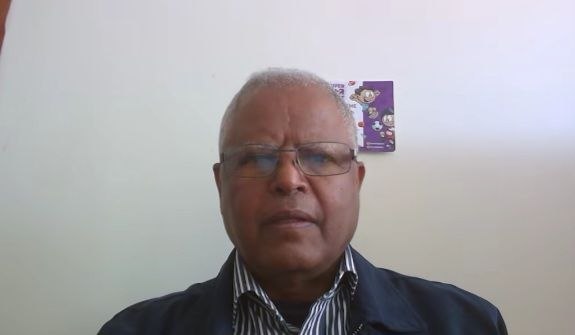
At the recent Horn of Africa Peace Conference, aptly titled “Tsimdi” (Solidarity) and hosted in Sudan, prominent political figure Andargachew Tsige delivered a virtual keynote address that was quickly swallowed by his supporters as a masterclass in regional statesmanship.
Speaking from London to an audience of regional delegates, armed group representatives, and intelligence officials, Andargachew laid out a vision for regional peace, stability, and mutual cooperation.
He preached the gospel of non-interference, slammed the Ethiopian government's domestic heavy-handedness, and called for a pan-regional alliance of "change forces."

It sounds noble, enlightened, and intellectually rigorous. In reality, it is a masterclass in political naivety, a dangerous distraction from the cold realities of the Horn of Africa’s geopolitics.
Andargachew’s first major thesis was a lecture on state sovereignty. He argued that lasting peace will only arrive when Horn of Africa nations stop meddling in each other’s internal affairs. This is rich coming from a forum explicitly designed to forge coalitions between cross-border dissidents and armed actors.
To demand "non-interference" while standing on a platform hosted by a fractured Sudanese state, and attended by actors with deep ties to regional security apparatuses, is a glaring contradiction. The Horn of Africa is not Western Europe; its borders are porous, its ethnic groups are split across artificial lines, and its conflicts are inherently transnational.
Preaching absolute sovereignty while simultaneously trying to organize an international coalition to alter the political landscape of Ethiopia is not diplomacy, it is political theater.
Andargachew further romanticized the historical, cultural, and economic ties of the region's peoples, blaming "greedy regimes" for fracturing this natural unity. This is a classic populist trope that separates the "pure people" from the "evil elite."
The bitter truth that Andargachew evades is that the fiercest conflicts in the Horn of Africa are often driven by deep-seated, domestic, and inter-ethnic grievances over land, resource allocation, and historical marginalization.
Blaming state actors alone ignores the volatile social fabrics that politicians themselves manipulate. You cannot build a stable regional house when the foundational bricks of the individual nations are on fire.
While Andargachew framed his speech as a grand strategy for the Horn of Africa, his primary objective was painfully local: launching a scathing attack on the current Ethiopian administration. By using an international security forum to litigate Ethiopia’s domestic political crises, Andargachew did the exact opposite of what he preached.
He internationalized a sovereign crisis, inviting regional neighbors, many of whom have competing geopolitical interests in the Nile basin and the Red Sea, to weigh in on Ethiopia’s internal governance.
Andargachew Tsige’s “Tsimdi” speech is a symptom of the Horn’s greatest tragedy: opposition leaders seeking external leverage to solve internal political stalemates. Forging a grand "solidarity" alliance among armed factions and foreign intelligence networks will not bring peace.
It will only turn Ethiopia and its neighbors into a grander chessboard for a regional proxy war. True peace requires domestic compromise, not romanticized external alliances wrapped in the false flag of regional solidarity.