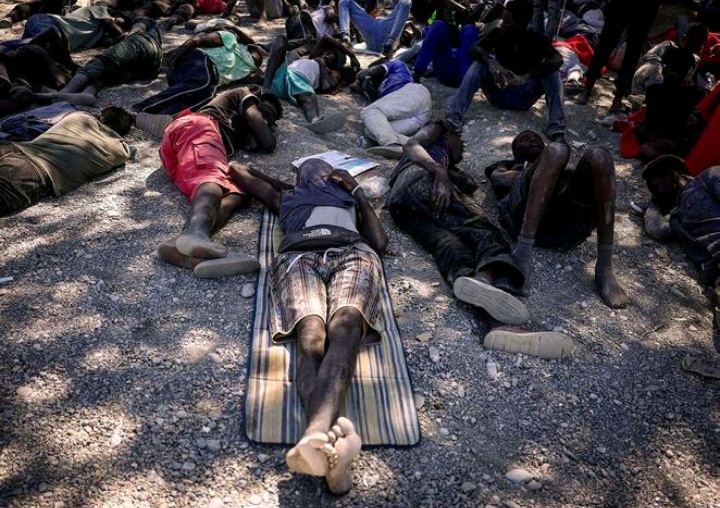
As the war in Sudan grinds through its fourth year, hundreds of thousands of refugees and asylum seekers who sought sanctuary across the border in South Sudan now face a stark, agonizing reality. Escaping active combat zones was supposed to guarantee survival, yet a catastrophic humanitarian emergency is unfolding not from active gunfire, but from a severe shortfall in global financial support.
The international safety net designed to protect the world's most vulnerable displaced populations is rapidly fraying, leaving over half a million human beings on the brink of mass starvation.
The core of this crisis lies in severe budget cuts made by major global powers. The World Food Programme (WFP) faces a massive $37-million funding gap in South Sudan alone. Over the past year, the United States sharply reduced its overall UN funding from $14.1 billion down to $3.38 billion, a drastic retraction that has severely damaged operational capabilities on the ground.

Compounding this collapse in resources, key European donors including Germany, France, and the United Kingdom have also cut their aid contributions. The tragic consequence is that food assistance for the most vulnerable among the 650,000 refugees living in South Sudan is projected to completely run out by October unless funds are raised immediately.
This aid cliff presents refugees with an unthinkable dilemma: endure starvation in overcrowded camps or risk returning to an active warzone. At Gorom Camp near Juba, refugee community leader Khalil Ali warns that without immediate structural intervention, virtually no residents will remain in the camp by December.
Desperation has reached such a breaking point that many individuals are actively choosing to head back into conflict zones rather than face what Ali describes as a "slow dying" in the camps.
The impact of these financial cutbacks extends far beyond acute hunger, tearing at the fundamental social and structural fabric of displaced families. Nelly Ondity, who runs gender-based violence sessions at Gorom, highlights how severe food shortages trigger extreme, exploitative coping mechanisms.
When basic survival is threatened, young girls are forced into early marriage, women are driven into abusive and exploitative relationships, children are pulled from education into high-risk labor, and family units shatter completely under the pressure.
Time is the most critical constraint in resolving this impending catastrophe. Because international food procurement, shipping, and distribution logistics require months to execute, securing funding after September will be far too late to avert widespread suffering.
Delayed relief means supplies will arrive only after families have been scattered, forced deeper into exploitation, or pushed back into the crosshairs of war. Without an immediate, rapid influx of resources from global donors, the crisis in South Sudan stands as a grim commentary on international neglect, transforming places of temporary refuge into centers of desperation.