Tigray’s Contested Leadership Move Casts Shadow over Pretoria Accord
ADDIS ABABA — A controversial political development in Mekelle this week has propelled Ethiopia’s fragile post-conflict landscape into a new phase of uncertainty, raising pressing questions over constitutional order and the durability of the Pretoria Agreement.
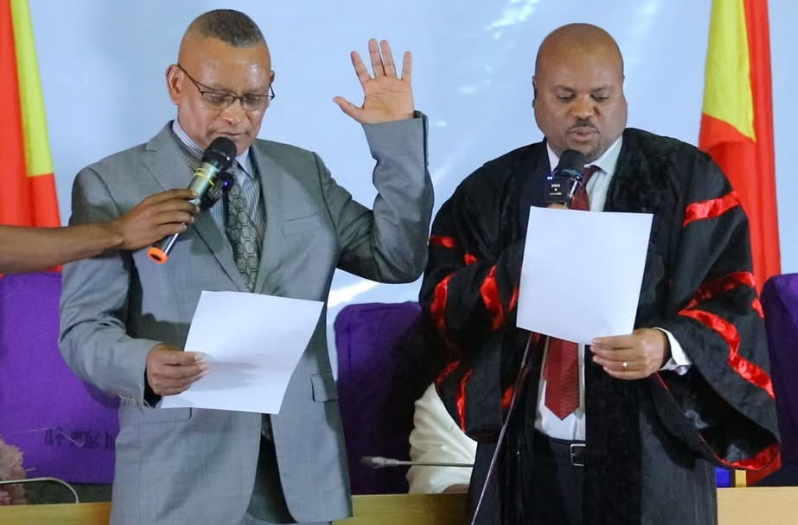
In an emergency session convened on Tuesday, the Tigray Regional Council—whose mandate traces back to the disputed 2020 regional elections—announced the appointment of Debretsion Gebremichael as president of the region. The council, whose legitimacy has long been contested by federal authorities and the National Election Board of Ethiopia, also named new parliamentary leadership, signalling an assertive attempt to reconstitute regional governance structures.

The move follows an earlier decision by the Tigray People’s Liberation Front central committee to reinstate the council, effectively sidelining the federally backed interim administration. Observers view the process—approved with minimal dissent—as a calculated political manoeuvre aimed at reasserting the party’s dominance in the region after years of conflict and uneasy peace.
However, the implications extend far beyond internal party dynamics. The federal government, led by Prime Minister Abiy Ahmed, had recently extended the mandate of the interim administration under Tadesse Werede for an additional year. The latest appointment appears to directly challenge that decision, potentially creating parallel centres of authority in Tigray—an outcome analysts warn could deepen institutional fragmentation.
Legal experts argue that the reinstatement of a council whose tenure had effectively lapsed contravenes both domestic legal frameworks and the spirit, if not the letter, of the Pretoria Agreement. The accord stipulates governance through an interim arrangement pending stabilisation, making the revival of pre-war political structures a contentious step that risks undermining confidence in the peace process.
TPLF officials have defended their actions, alleging that the federal government has failed to fully implement the terms of the peace agreement. Yet this justification has found limited traction among constitutional scholars, who contend that unilateral measures of this nature may erode the already delicate trust between Addis Ababa and Mekelle.
The voting pattern within the council, reportedly marked by abstentions and limited opposition, also hints at internal fissures. While a report presented by the party leadership on the status of the peace agreement received unanimous endorsement, the broader decision-making process suggests that consensus may not be as robust as outwardly portrayed.
The broader ramifications are significant. The emergence of competing authorities risks confusing residents, complicating administrative functions, and deterring much-needed reconstruction efforts in a region still recovering from war. More critically, it could imperil the tenuous peace achieved after two years of devastating conflict.
For the federal government, the development presents a delicate balancing act: responding firmly to perceived constitutional breaches while avoiding actions that could reignite hostilities. For Tigray’s political actors, it underscores the challenge of navigating post-conflict governance without destabilising the fragile equilibrium.
As Ethiopia stands at this crossroads, the unfolding situation in Tigray will serve as a litmus test for the resilience of its constitutional framework and the sincerity of its commitment to lasting peace.